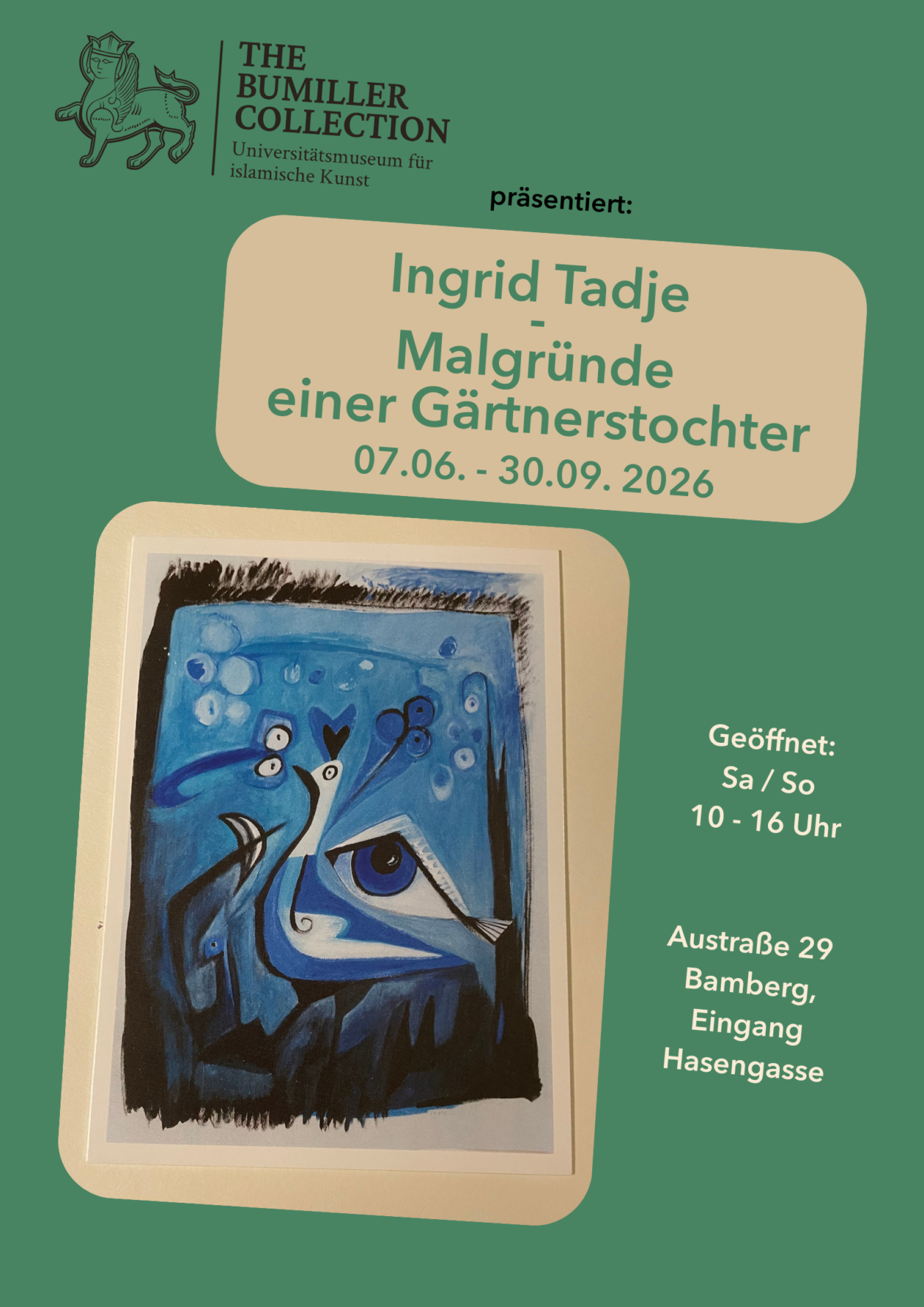
Temporary Exhibition “Malgründe einer Gärtnerstochter”

Paintings and Ceramics by Ingrid Tadje

The painter, ceramicist, art educator, and art therapist Ingrid Tadje
(born 1940 in Osnabrück) studied at the Municipal School of Applied Arts in Würzburg,
under instructors including Wolfgang Lenz.

The central theme of her art is her love of creation and her exploration of it,
which she conveys through her depictions of a living, breathing natural world.
As a long-standing member of the BBK, she exhibited her extensive body of work
throughout Bavaria in group and solo exhibitions.
She was a regular guest at the Haßberge Studio Days in Königsberg i.B.,
most recently in 2025 at the Bärbel May Studio.

She has been associated with the University Museum of Islamic Art since its founding.
She produced drawings of the objects for the museum’s first publications.
Her intensive engagement with Iranian art, in which flora, fauna, and mythical creatures
are omnipresent as motifs and forms, inspired the artist to incorporate such motifs
into her painting.
This led to the first special exhibition at the Bumiller Collection in its opening year, 1995,
titled “Bulbuliade” – Gathering of the Nightingales.
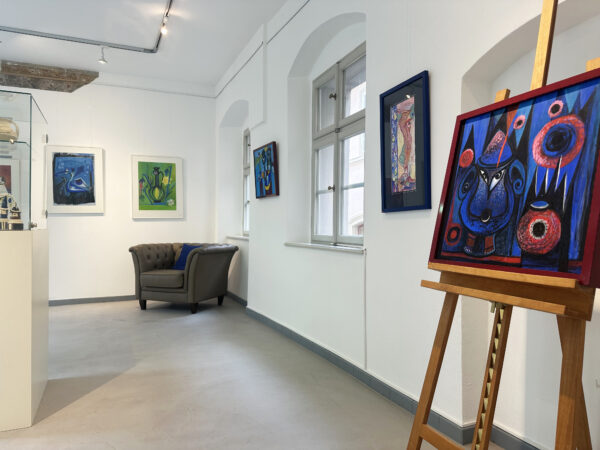
In the current exhibition, Tadje presents a selection of gouache paintings and ceramics
related to objects from the Bumiller Collection.


The exhibition will be on view from June 7th to September 30th, 2026,
every Saturday and Sunday between 10 a.m. and 4 p.m. in the University Museum’s studio.
 

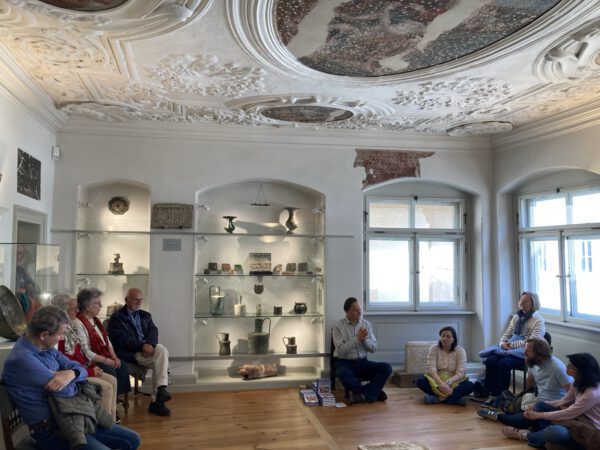
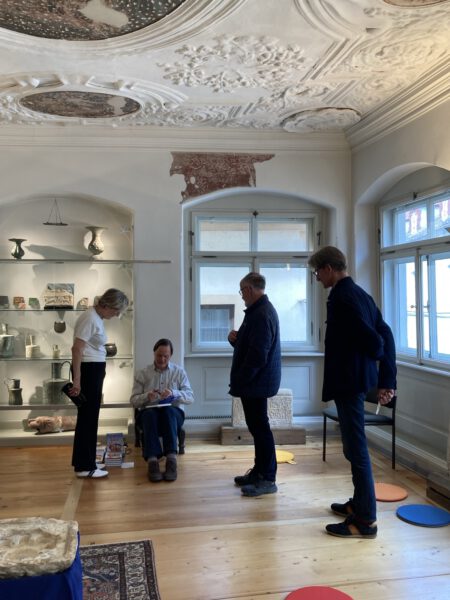
Review – IMT 2026

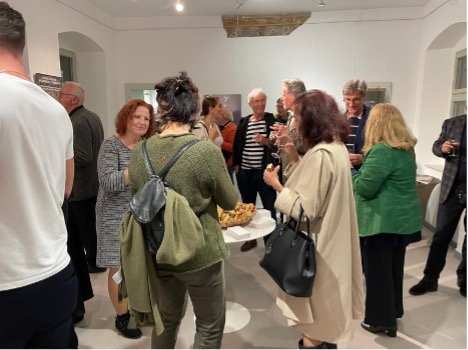
On Sunday, May 17, 2026, the Bumiller Collection took part
in the International Museum Day.
This year’s theme was “Museums uniting a divided world.”

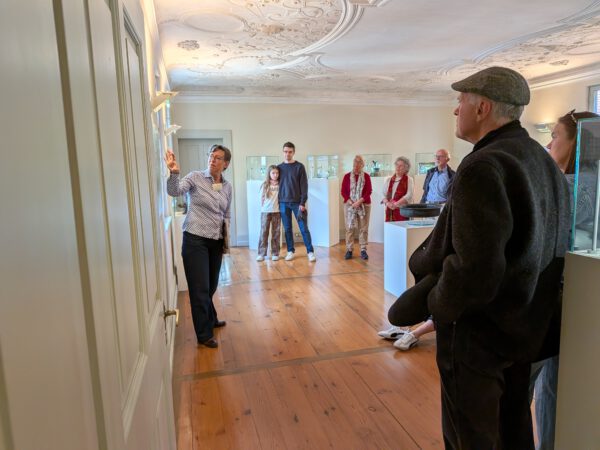
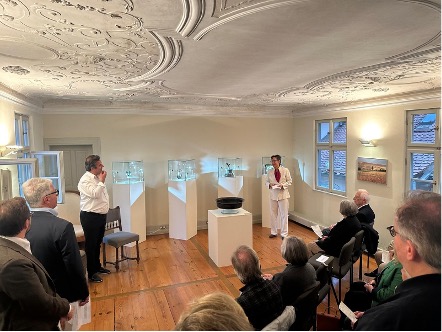
The guided tour “A Collector’s Approach Refreshed” highlighted the transformation
of the private collection into a conceptually and pedagogically curated
exhibition that is now accessible to experts and the general public alike.


In the afternoon, historian, author, and presenter Dr. Rolf-Bernhard Essig shared entertaining anecdotes from his book “Da haben wir den Salat. In 80 Sprichwörtern um die Welt” in the Festsaal. In his interactive presentation on proverbs and the stories behind them, he transported the audience into the rich storytelling tradition of Asia.

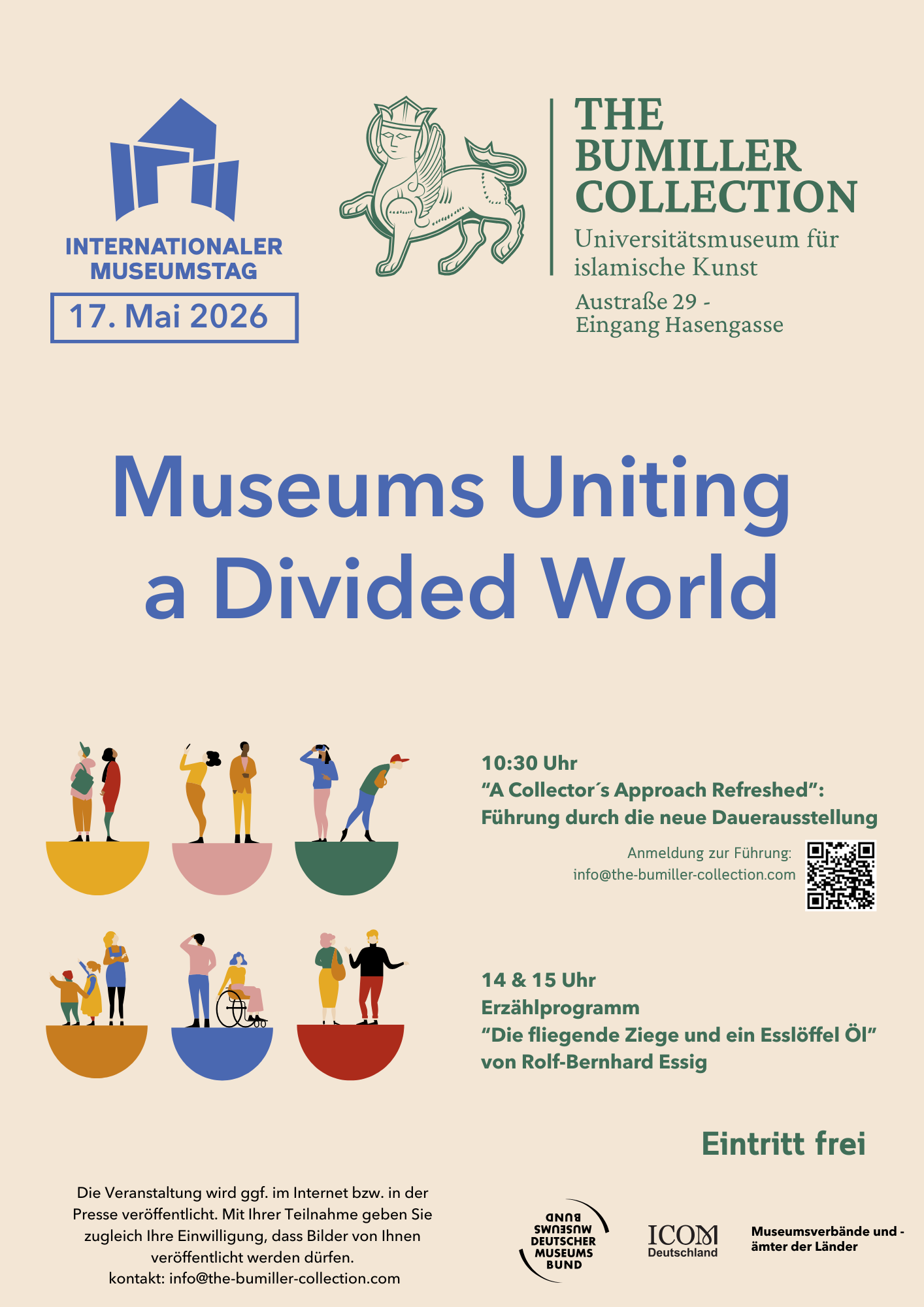
International Museum Day May 17th 2026

International Museum Day will be celebrated in Germany on May 17, 2026.
This year’s theme is “Museums uniting a divided world.”

The University Museum invites you to join the guided tour “A Collector´s Approach Refreshed” at 10:30 a.m. to experience the newly redesigned permanent exhibition. The Bumiller Collection, a collection unlike any other in the world,
showcases art and crafts spanning five centuries along the Silk Road.
Please register via info@the-bumiller-collection.com.


Photocredit: Gudrun Schury

Furthermore the well-known author Dr. Rolf-Bernhard Essig will host a storytelling session
at 2:00 p.m. and 3:00 p.m., sharing Eastern wisdom and stories from his entertaining book
“Da haben wir den Salat. In 80 Sprichwörtern um die Welt” .

Nowruz — we wish you a wonderful beginning of spring and a happy Persian New Year!

For 2,500 years, the Iranian cultural sphere has regarded the spring equinox around March 20th as the beginning of spring and New Year’s Day.
Nowruz means “new day” and symbolizes new beginnings and hope.

The festival lasts for 13 days and is celebrated from Asia Minor to India.

Preparations include a thorough cleaning (khane takuni), sprouting grains or lentils (sabzi), and, on the last Wednesday before the festival, jumping over a fire (chahar shanbe suri) to drive away the evil energies of the old year.
On the first day of the festival, families gather around a table (haft sin) decorated with seven special items. There, the astronomical appearance of the constellation is counted down to the second. Over the next few days, relatives are visited, and the children will receive gifts. The final day is observed outdoors (sizdah bedar).

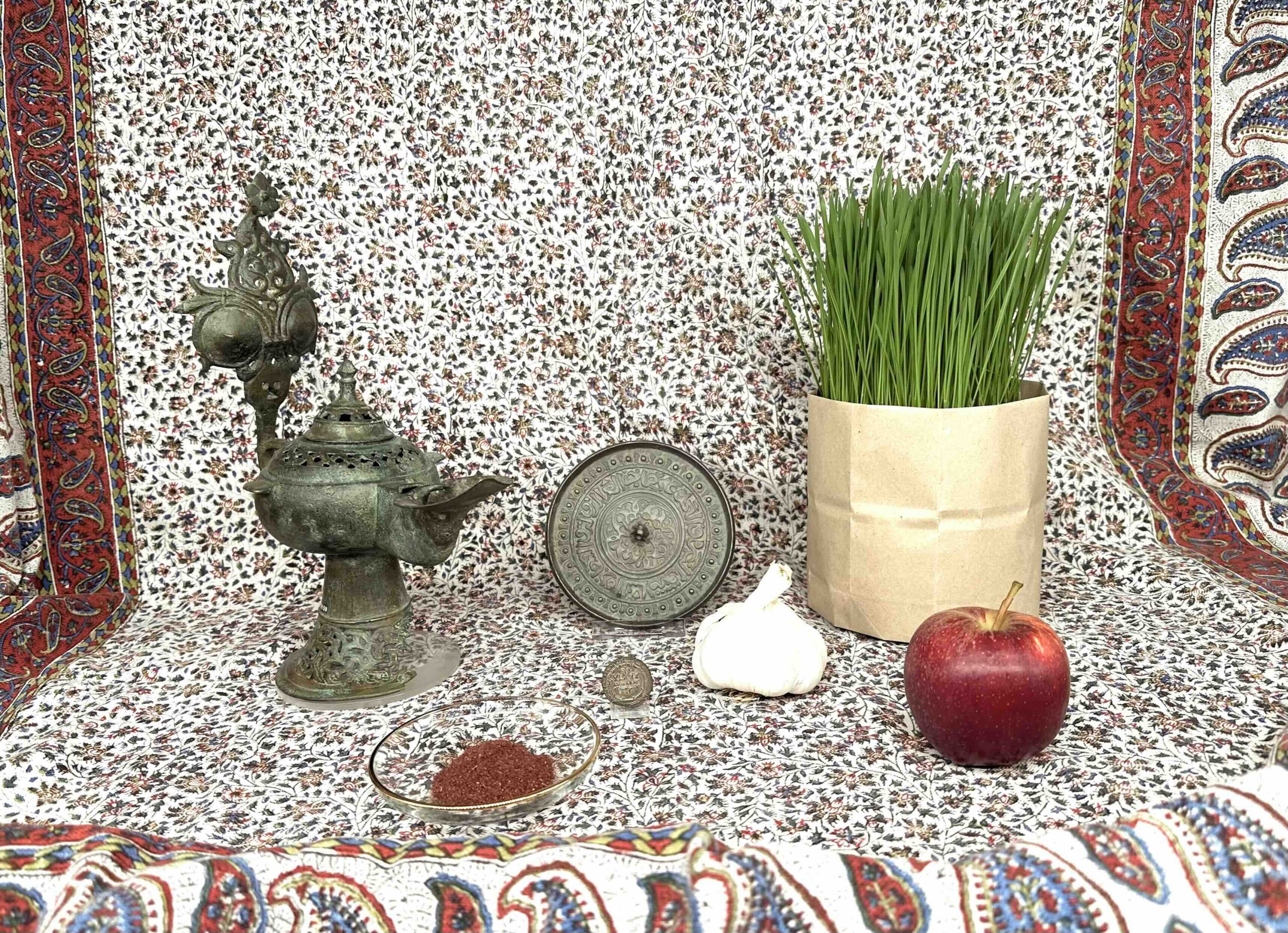
The New Year’s table setting haft sin

It is all about new beginnings and the letter S (sin)). At least seven (haft) objects are placed, each of which is imbued with symbolic meaning and whose name preferably begins with the letter S:

Sabzi (grain- / lentilshoots) = vivacity
Sir (garlic) = protection
Sumach (sumac spice) = The Taste of Life
Sib (apple) = beauty and health

oil lamp (tscheragh) = hope, warmth, protection
coin(seke) = prosperity
mirror (ayineh) = purity and honesty


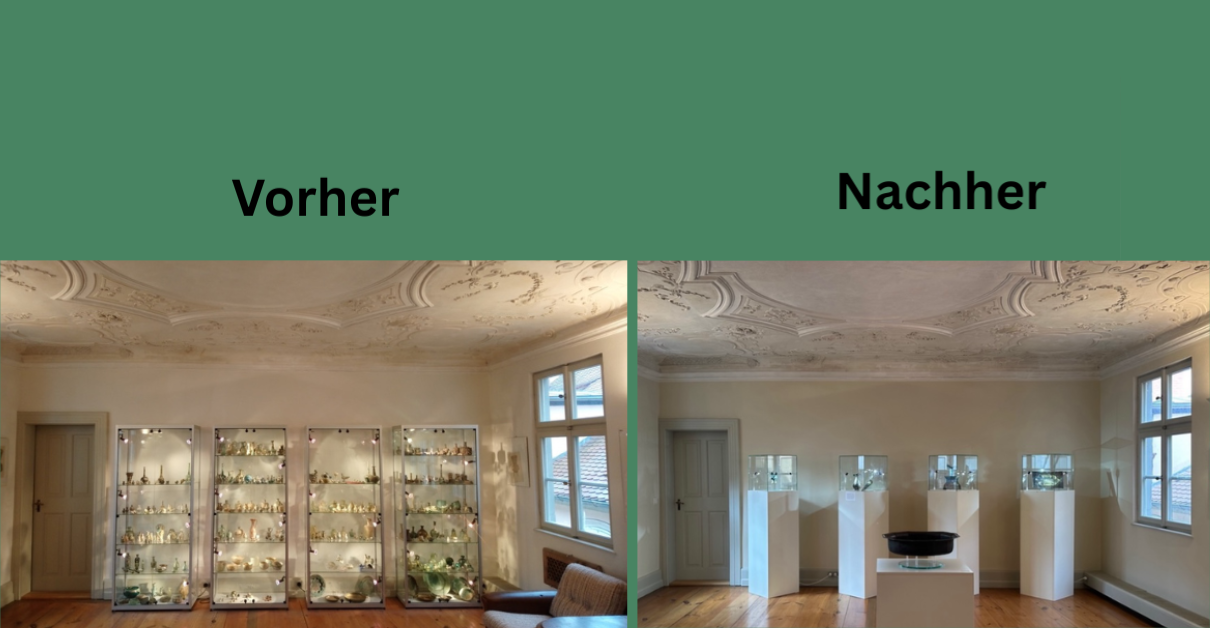
Before – After

New exhibition – new themes


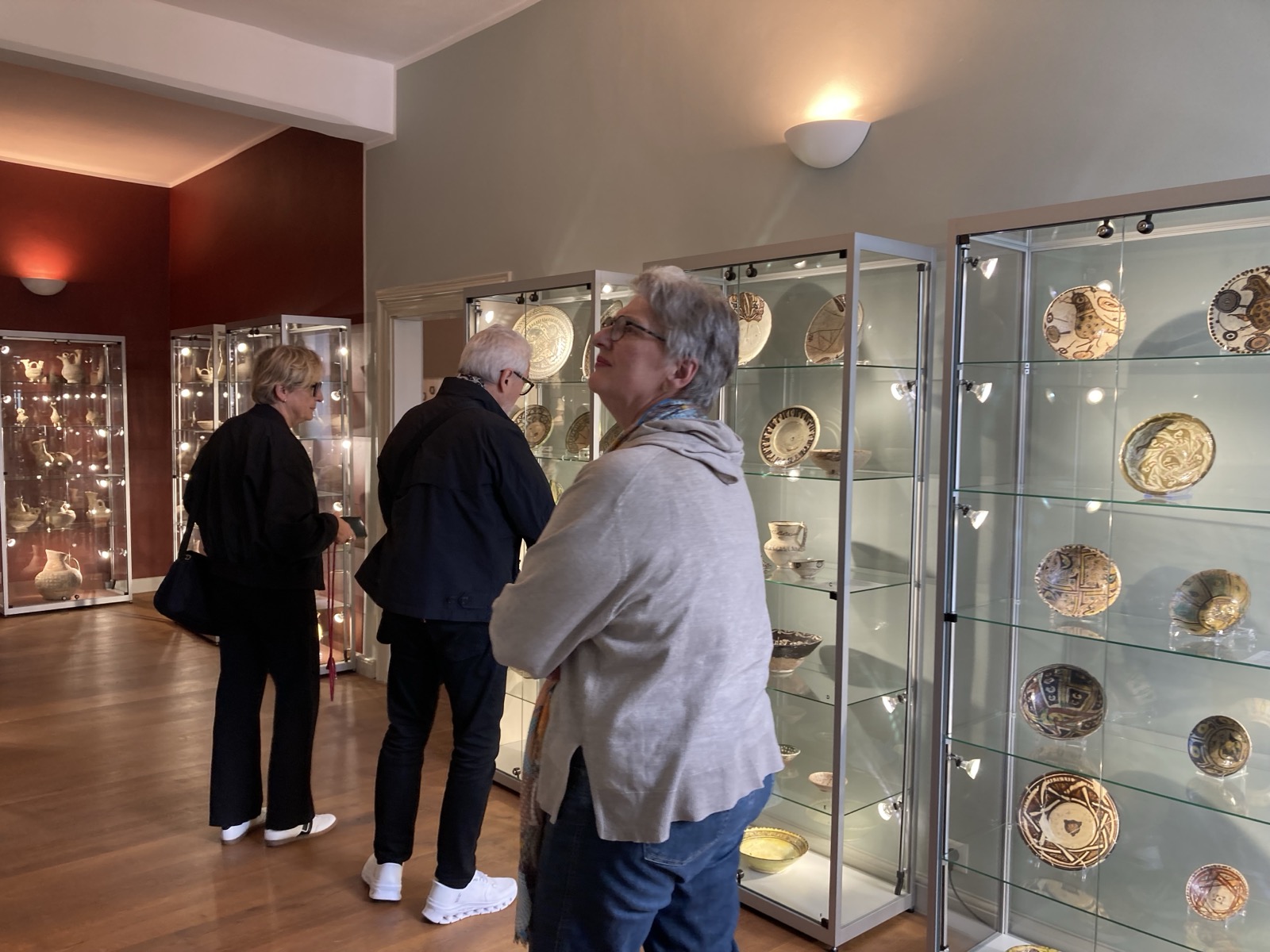
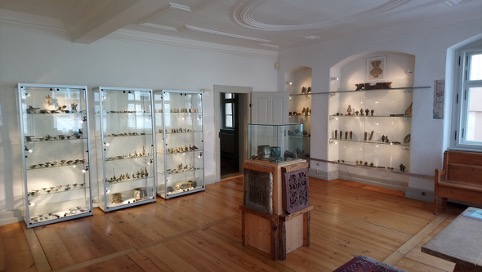
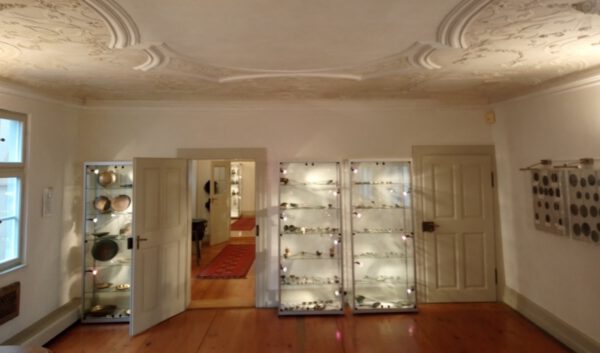
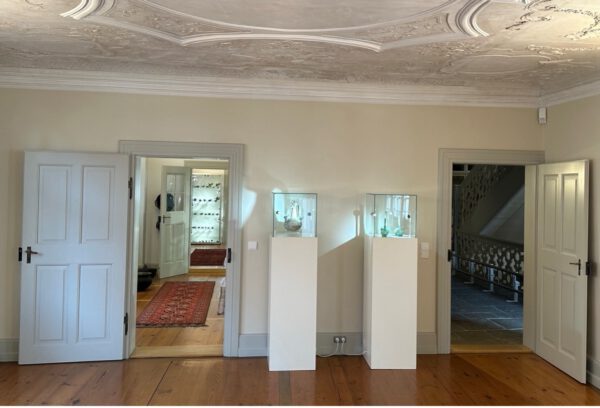
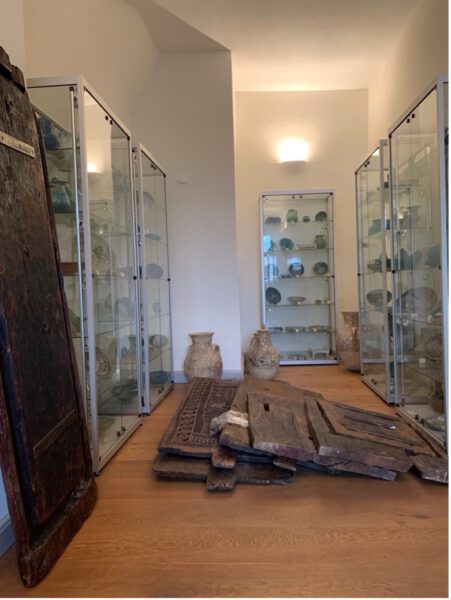
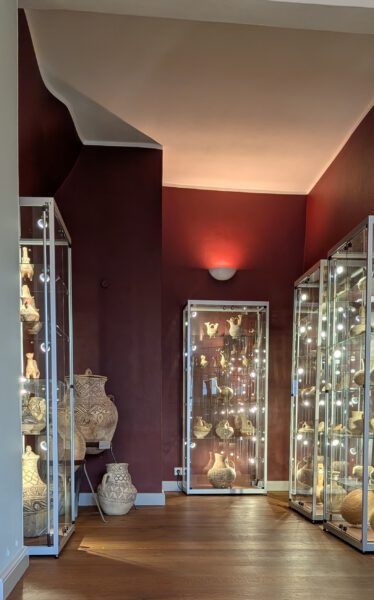
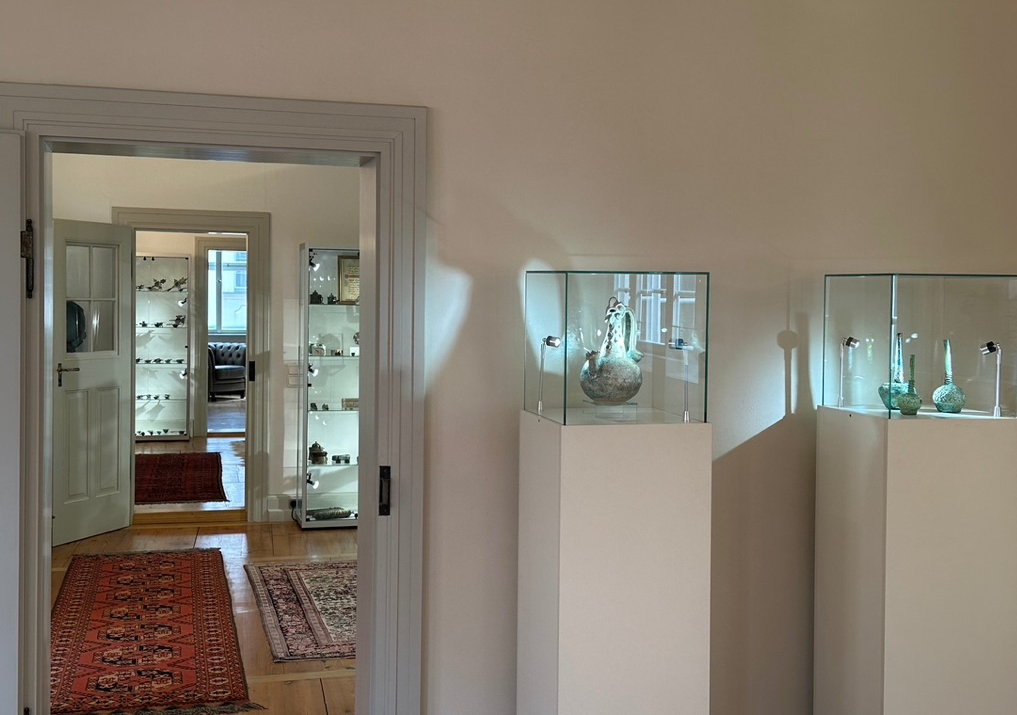
Over a three-year period—from 2022 to 2025—the University Museum’s exhibition space and storage facilities were renovated. This included technical and aesthetic innovations that brought plenty of color, light, and new perspectives to the historic spaces.

Thanks to the extensive collection, the curator was able to draw on a wealth of material to illustrate various aspects of Islamic art and the original context of the objects. The collection was given an educational overhaul, while preserving the collection’s original character, which is based on the typological development of forms. Like a window into the past, a slice of the history of the Iranian region between the 9th and 13th centuries comes into view.

A spotlight rests on the skilled trades. Bronze, ceramic, and glass manufacturing techniques, technical innovations and work organization demonstrate a high aesthetic and technical standard. Simple, multifunctional appliances for home use offer a glimpse into everyday life. Scientific instruments illustrate the importance of the various scientific disciplines. In the banquet hall of the house, visitors can learn how a military dynasty of Turkish origin came to establish an independent empire and set up its court.

History of Science & Medicine 2021 and 2025


Gartensaal 2021 and 2025

Ceramics 2021 and 2025

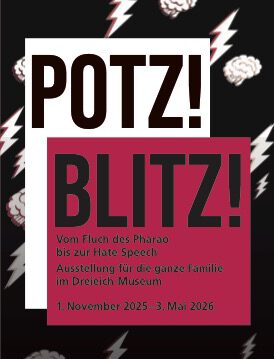
BC objects in the exhibition “Potz!Blitz!”

From the Curse of the Pharaoh to Hate Speech:

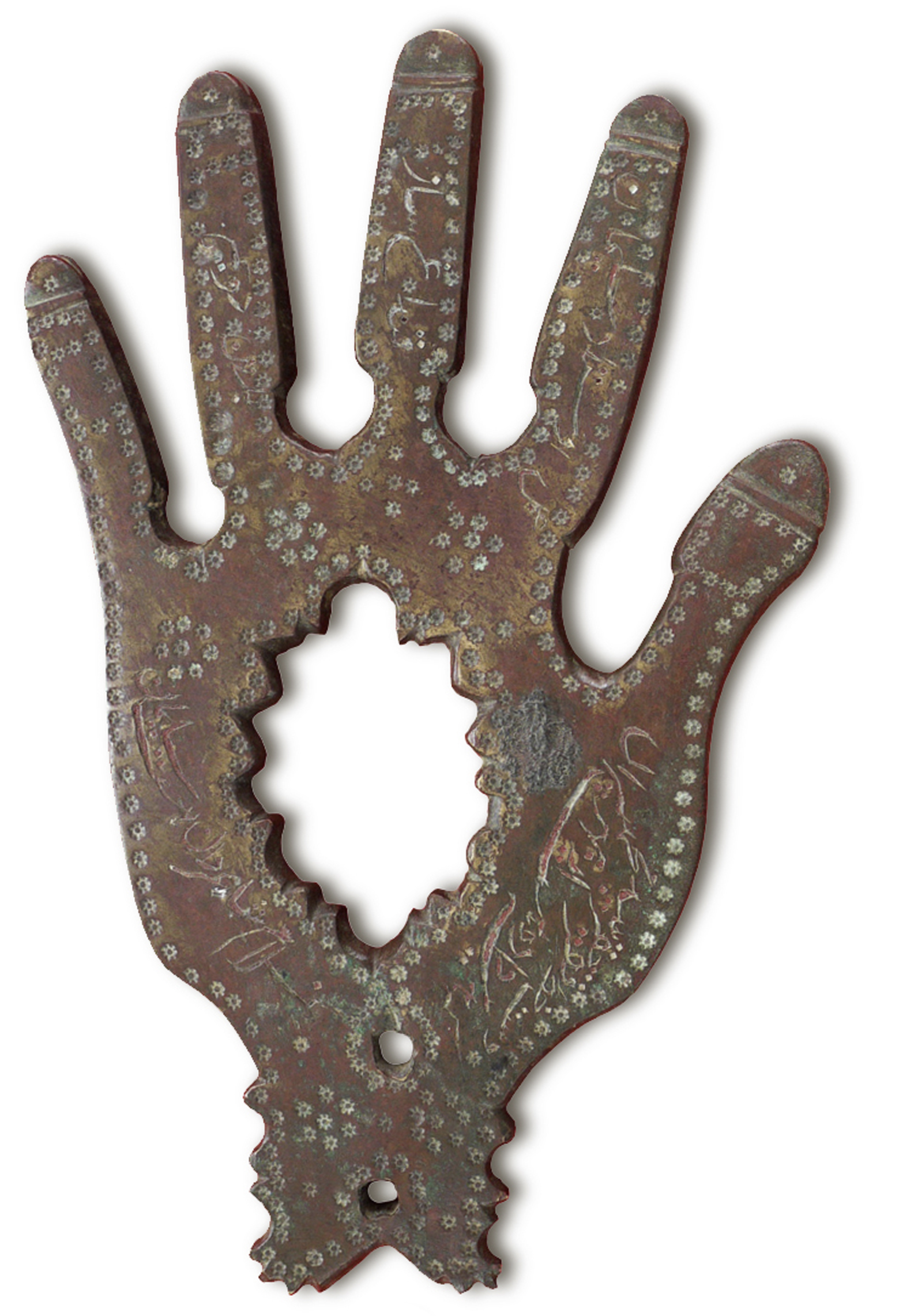
Two items from the Bumiller Collection are featured in the exhibition on curses,
swear words, and protective spells.

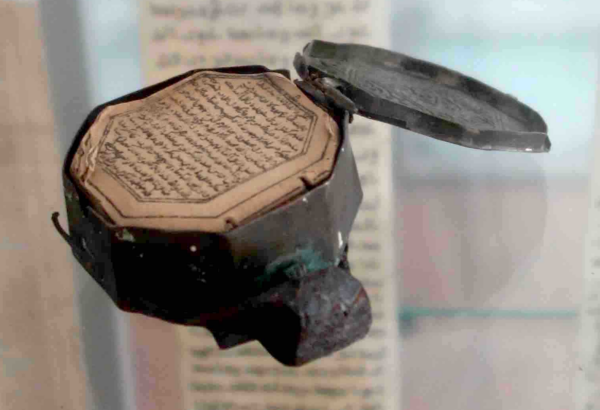
They represent the other side of the curse: the cradle amulet and the miniature Quran
enclosed in a metal capsule, containing prayers, protect against the evil eye
and curses.

The exhibition was conceived in 2022 by the Bamberg-based literary scholar and historian
Dr. Rolf-Bernhard Essig for the Museum of Communication in Frankfurt. Since then,
it has been on tour at various venues across Germany:
Museum für Kommunikation Berlin (2023), Museum für Kommunikation Nürnberg (2024),
Gustav-Lübcke-Museum Hamm (2025).
The objects will be on display in the special exhibition at the Dreieich Museum until May 17th, 2026,
and at the Museum Bayerisches Vogtland in Hof starting October 29th, 2026.

Reopening of the Museum in October

The museum is open again from October 1st 2025! 

Discover Islamic art from the Iranian world along the Silk Road


We are very pleased to welcome you back in the newly designed premises.

Opening hours:

Tue / Wed / Thu    10 am – 2 pm

Sat / Sun                 10 am – 4 pm

Opening hours

Opening hours starting from October 1st 2025

Tue / Wed / Thur     10 am –  2 pm
Sat / Sun                  10 am – 4 pm

guided tours on request


Practical Training Week for Students of Digital Technologies / University of Bamberg

Between February 27th and 29th Dr John Hindmarch instructed students of Digital Technologies in Heritage Conservation in 3D-scanning objects. This project enabled students to handle and investigate medieval objects of bronze and ceramic. The accurate scans can provide information on production processes, surface treatment and make decoration better recognisable. Experimenting with different textures can help analysing or even reconstruct motifs. A 3D-Scan is also an ideal condiderate possibility for research; the object can be magnified and viewed from all sides without handling.


Obituary Gertrud Sackerlotzky

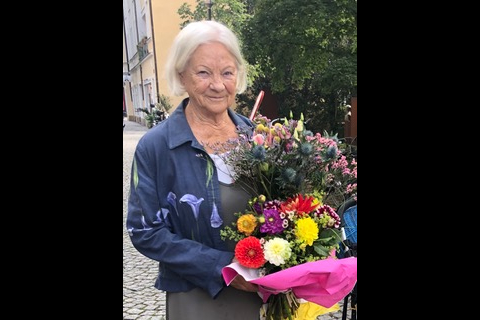
On September 3, 2023, Gertrud Sackerlotzky passed away at the age of 85 after a short, serious illness. The Bumiller Art Foundation, sponsor of the University Museum of Islamic Art, is thus not only losing its president, but also a dedicated museum director who actively supported the activities of the university museum until the very end.

As Manfred Bumiller’s partner, she accompanied the development of the collection from its beginnings in 1981 in the villa they shared in Munich. The planning and establishment of a museum at a suitable location eventually led her back to her home town of Bamberg. In addition to managing the foundation set up specifically to support the Bumiller Collection, she took over as President of the museum after the death of her long-time partner, the benefactor Manfred Bumiller in 2018 and appointed a curator to look after the extensive collection. She has accompanied the redesign of the exhibition in recent years with great commitment, interest and active input. She was always an important and wise contact person for questions regarding the organization, furnishing and presentation of the museum.

Despite her work in Bamberg, she did not neglect her passion for traveling. Here, too, culture has always been a significant driving force. She always came back from her numerous travel destinations in Europe and beyond inspired and with new ideas.

Her unwavering interest in art, combined with her keen powers of observation and her direct and jovial manner, always created a lively atmosphere. The museum team will miss her commitment.


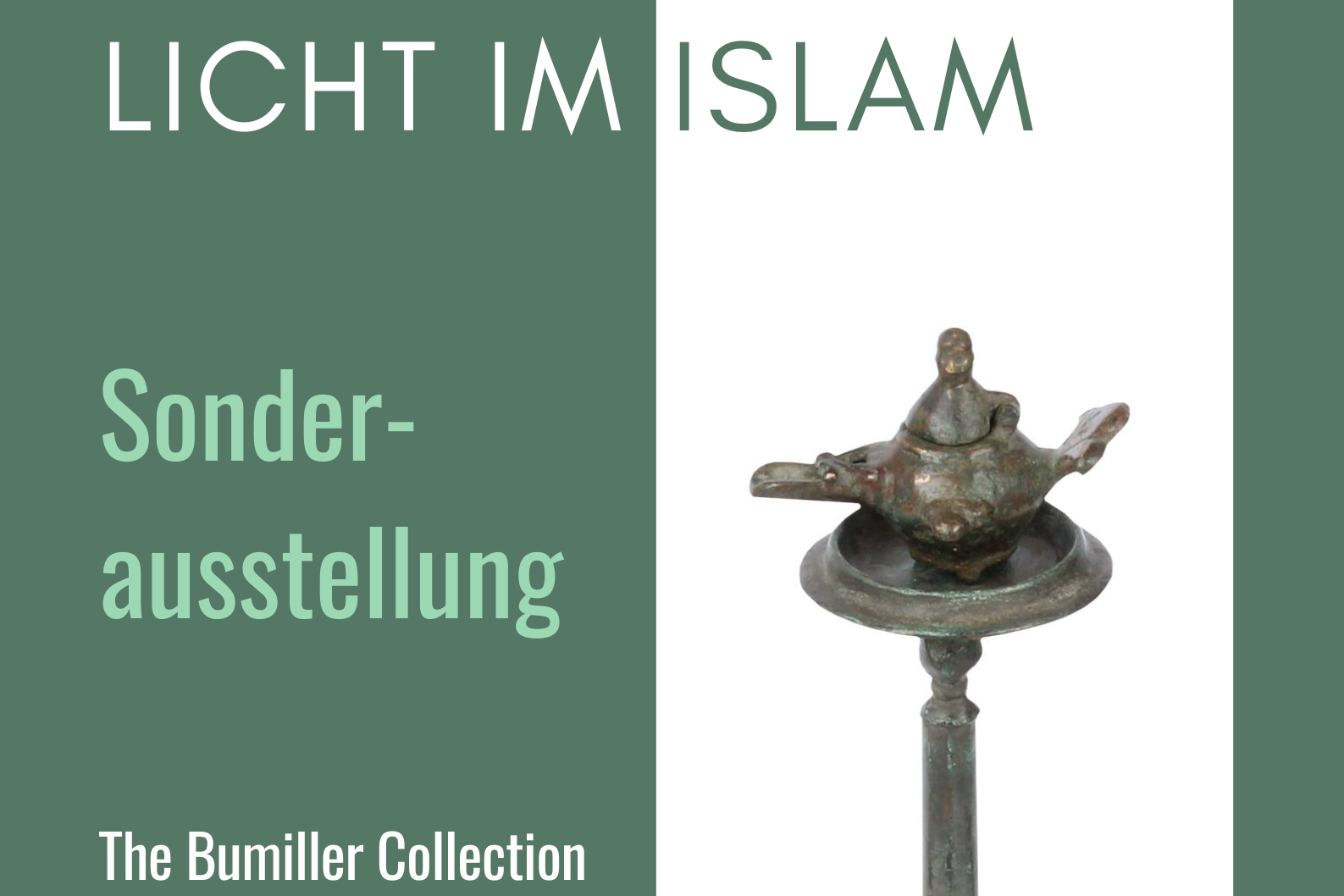
Light in Islam – Studio exhibition extended until 30 September 2024

Extension of our special exhibition “Light in Islam” until September 30, 2024: We present objects from the 9th – 17th centuries. Lamp stands, a variety of oil lamps, candlesticks and hanging lamps of different materials convey an impression of the way light was used in everyday Islamic life.. The exhibition also provides insights into astrological and astronomical attempts to explain light radiation and is dedicated to the great metaphysical significance of light as a symbol of enlightenment and knowledge in religion and philosophy.

The concept for the exhibition was developed during a seminar at the faculty of Islamic Art History and Archaeology (University of Bamberg) under the direction of Dr. Anja Heidenreich.

Opening hours:
Tue-Thurs, 10 a.m. – 2 p.m. and every first weekend of the month, Saturday and Sunday, 10 a.m. – 4 p.m.


Guided tours in the program of the VHS Bamberg

Thu 18th April 2024, 16.30 – 18:00
The house “Zum Benedikt”
A residential and commercial building “in der Au”


Fri. 06. 06. 2024, 17 – 18:30
Guided tour of the collection