For 2,500 years, the Iranian cultural sphere has regarded the spring equinox around March 20th as the beginning of spring and New Year’s Day.
Nowruz means “new day” and symbolizes new beginnings and hope.
The festival lasts for 13 days and is celebrated from Asia Minor to India.
Preparations include a thorough cleaning (khane takuni), sprouting grains or lentils (sabzi), and, on the last Wednesday before the festival, jumping over a fire (chahar shanbe suri) to drive away the evil energies of the old year.
On the first day of the festival, families gather around a table (haft sin) decorated with seven special items. There, the astronomical appearance of the constellation is counted down to the second. Over the next few days, relatives are visited, and the children will receive gifts. The final day is observed outdoors (sizdah bedar).
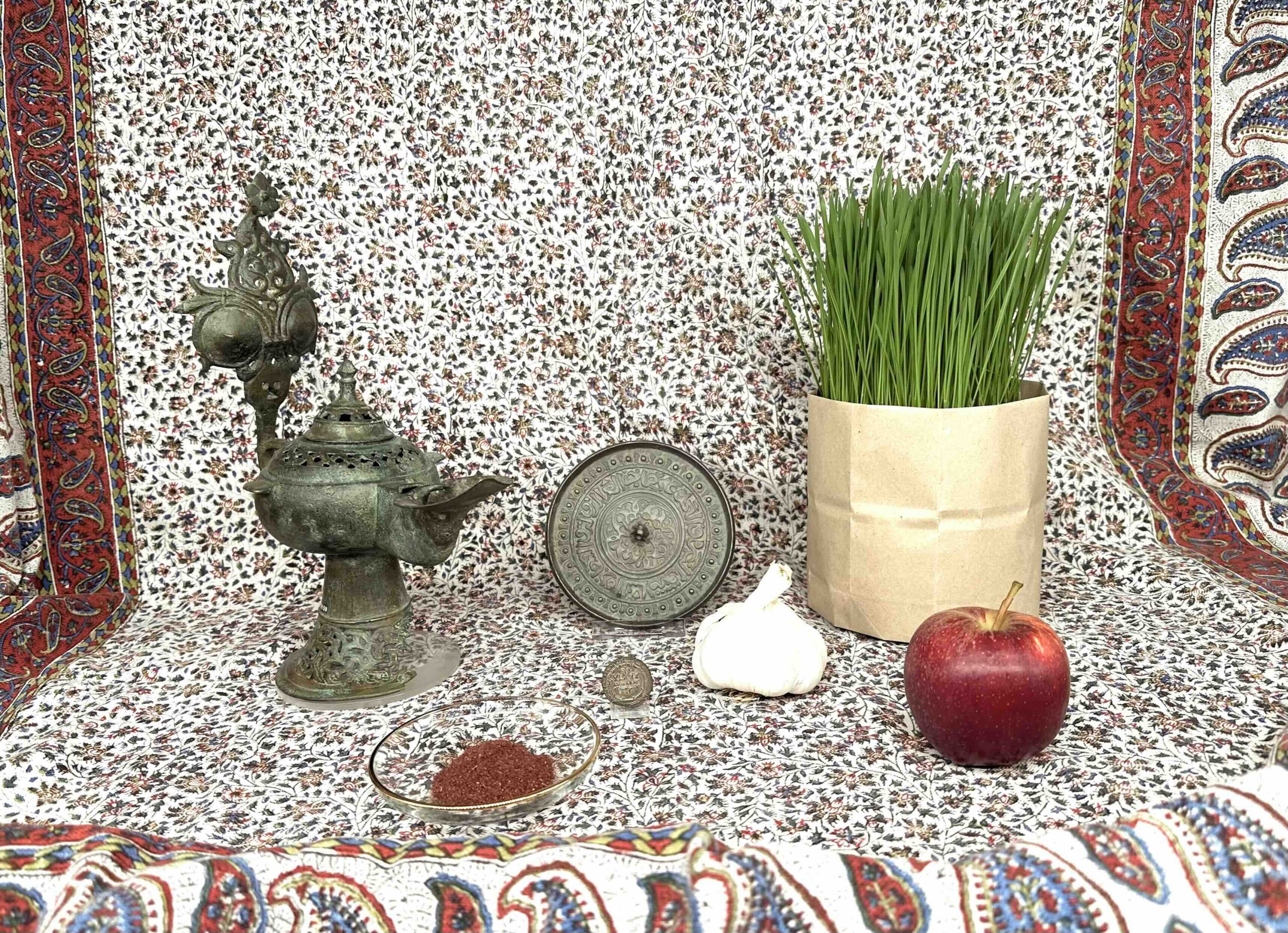
The New Year’s table setting haft sin
It is all about new beginnings and the letter S (sin)). At least seven (haft) objects are placed, each of which is imbued with symbolic meaning and whose name preferably begins with the letter S:
Sabzi (grain- / lentilshoots) = vivacity
Sir (garlic) = protection
Sumach (sumac spice) = The Taste of Life
Sib (apple) = beauty and health
oil lamp (tscheragh) = hope, warmth, protection
coin(seke) = prosperity
mirror (ayineh) = purity and honesty


